One shade blocks the sun. One curtain adds style. Put them together the right way, and every window in your house starts looking like it was designed by a professional, not picked off a shelf.
Setting the Stage for a Custom Look
Walk into any professionally designed room and you'll notice something most homeowners miss: the window treatments are never just one layer. Blackout shades handle the heavy lifting of light control and privacy, while decorative drapery adds softness, color, and height. Together they create the kind of finished, custom look that a single blind or a single curtain panel simply cannot deliver on its own.
This guide walks through each room in the house, showing how the pairing changes based on how a space is used. Whether you're refreshing a formal living room or finally solving a bedroom that gets too much morning sun, the same layering principle applies everywhere, including projects covered in our guide to sustainable décor choices for Scottsdale interiors.

The Living Room: Where Style Meets Function
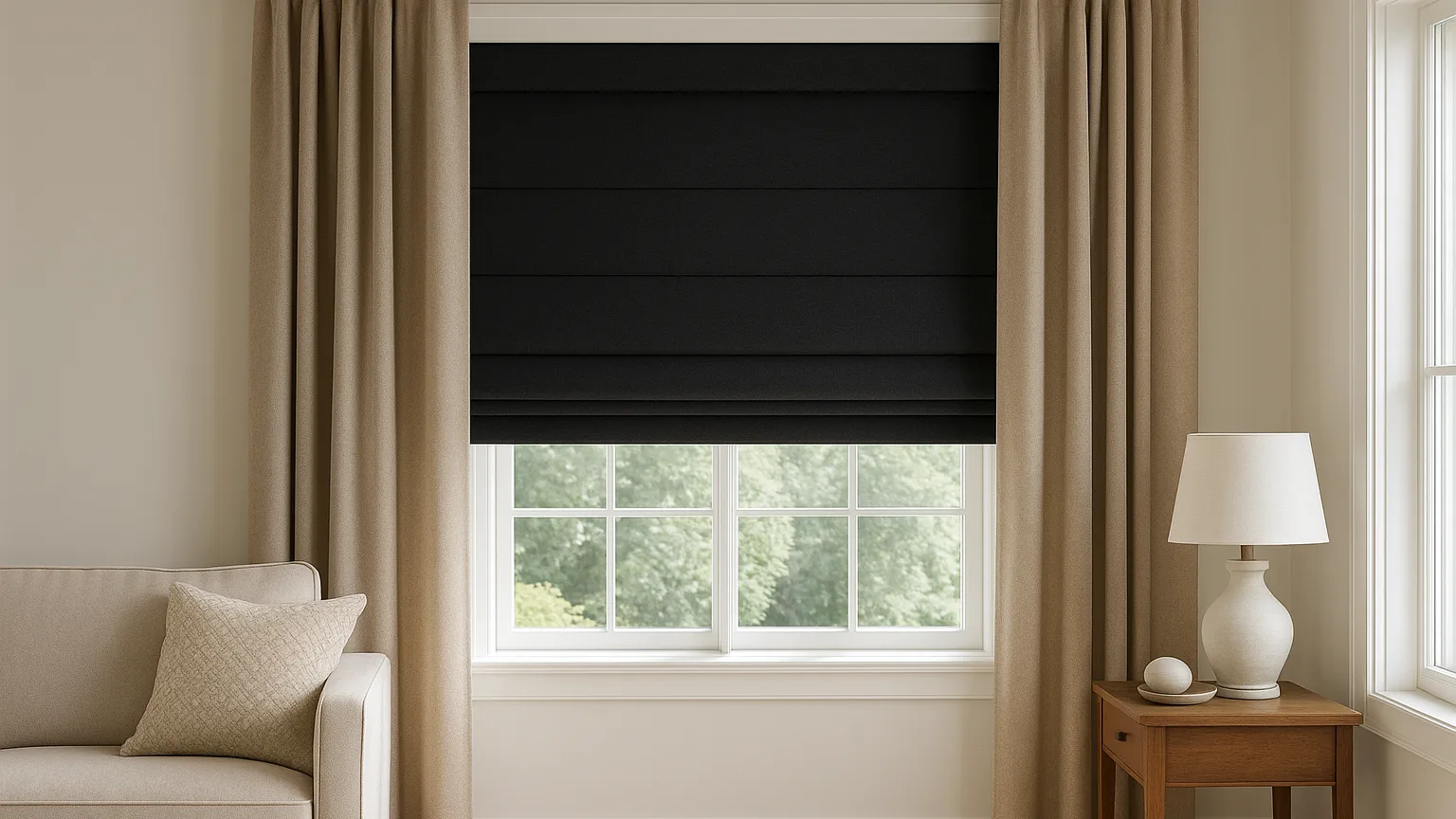
Living rooms usually face the street or a shared yard, so privacy and glare control matter as much as looks. A cellular or roller blackout shade mounted inside the window frame keeps the daytime view clean, while floor-length drapery hung wide and high on the wall frames the window and makes the ceiling feel taller.
Getting the Combination Right
- Mount drapery rods at least four inches above the window frame, and closer to the ceiling in rooms with low ceilings.
- Choose shades in a neutral tone so they disappear into the wall color, letting the drapery carry the pattern or color statement.
- Extend the rod six to ten inches past the window on each side so panels stack fully off the glass during the day.
Designer Insight: Getting the Proportions Right
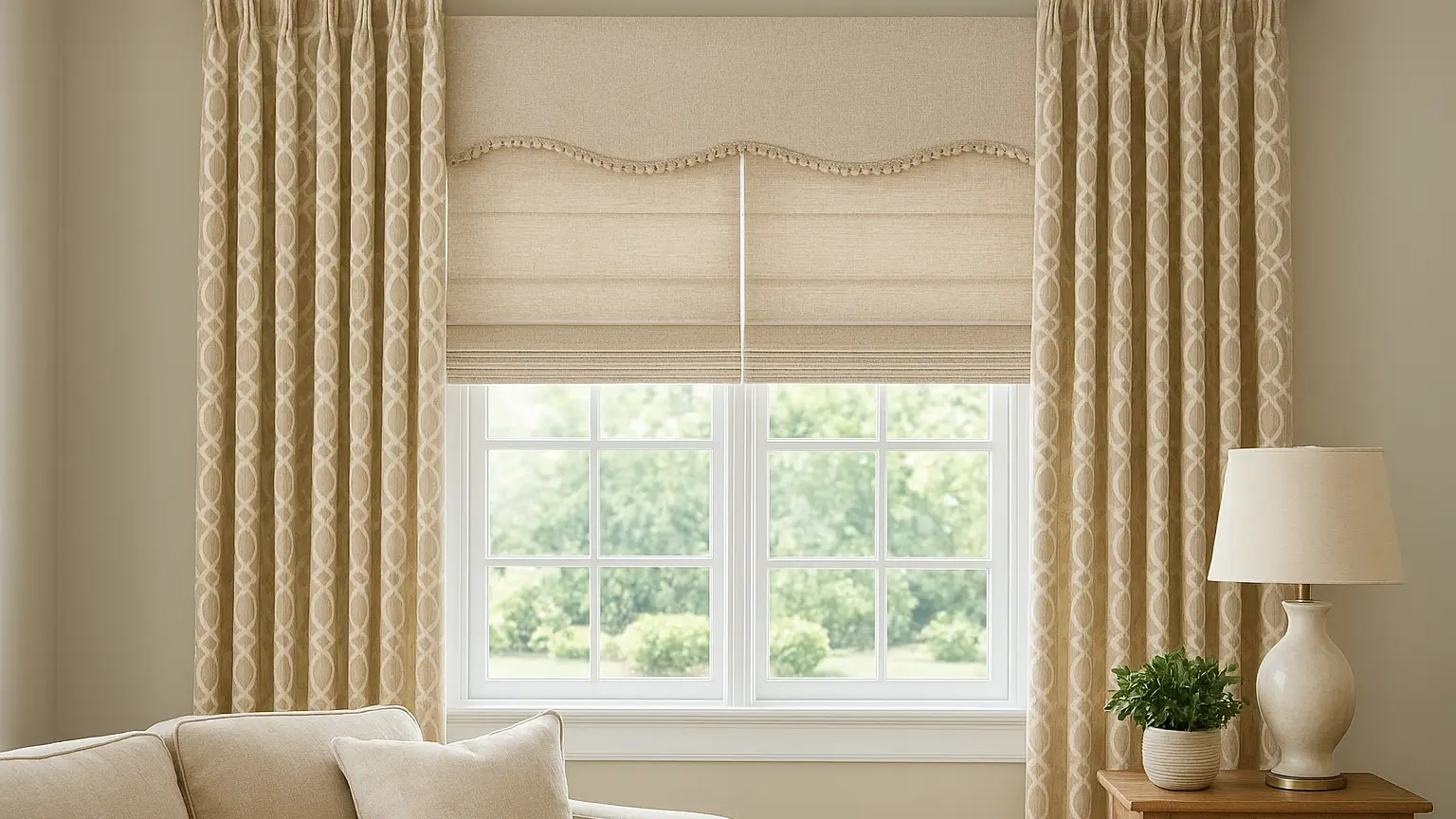
Proportion is the detail that separates a builder-grade window from a designer one. As a rule, drapery panels should each measure roughly one and a half to two times the width of the window when fully closed, so they look full rather than skimpy. Blackout shades should sit flush and flat against the glass, acting almost like a clean backdrop for the fabric layered in front of them.
The Bedroom: Layering for Deep, Restful Sleep
Bedrooms are where blackout performance really counts. Even a small gap of light around the edges of a shade can interrupt sleep, so this is the one room where getting the fit exact matters more than anything else.
- Install blackout shades with side channels or light-blocking fins so no light leaks along the frame.
- Layer heavier drapery, like velvet or a lined linen blend, over the shade for both warmth and an extra buffer against outside light.
- Keep the color palette calm and save bold pattern for accent pillows rather than the drapery itself.
"The biggest mistake homeowners make is treating the shade and the drapery as two separate purchases instead of one system," says Melissa Grant, lead design specialist at Blinds Chalet. "When you measure and order them together, the whole window reads as one intentional design instead of two mismatched pieces."
Hardware Matters More Than You Think
Cheap rods and brackets can undercut an otherwise perfect pairing. Sturdy, wide-diameter rods hold heavier blackout-lined fabric without sagging in the middle, and rings or grommets that glide quietly make daily use far more pleasant. Matching the finish of the hardware to existing fixtures in the room, like door handles or lighting, ties the whole window treatment into the rest of the space.
Nurseries, Home Offices, and Media Rooms
Nurseries benefit from the same total-darkness approach as bedrooms, but with an added layer of safety. Cordless or motorized blackout shades remove dangling cords from the crib area, and drapery can be hung slightly higher than standard to keep curious hands away from the hem.
Home Offices and Screens
Glare on a monitor is just as disruptive as glare in a bedroom. A blackout shade lowered halfway during video calls, paired with a light drapery panel pulled to the side, gives full control without making the room feel closed off during regular work hours.
Media Rooms
For a true home theater feel, floor-to-ceiling blackout drapery over a blackout shade blocks nearly all outside light, similar to the level of thoughtful detail used in home renovation projects designed to boost both function and resale value.
Designer Insight: Getting the Proportions Right
Proportion is the detail that separates a builder-grade window from a designer one. As a rule, drapery panels should each measure roughly one and a half to two times the width of the window when fully closed, so they look full rather than skimpy. Blackout shades should sit flush and flat against the glass, acting almost like a clean backdrop for the fabric layered in front of them.
The Finished Window Is the Whole Point
Layering blackout shades with decorative drapery isn't an extra step, it's what turns a plain window into a finished one. Each room asks for a slightly different balance of privacy, light control, and style, but the underlying formula stays the same: solid function underneath, personality on top.
Once you start looking at windows this way, it's hard to walk past a bare blind again. A little planning around proportion, hardware, and fabric pairing goes a long way toward a room that feels pulled together rather than half finished, and that kind of small, deliberate choice is often what separates a house that feels decorated from one that simply feels furnished.